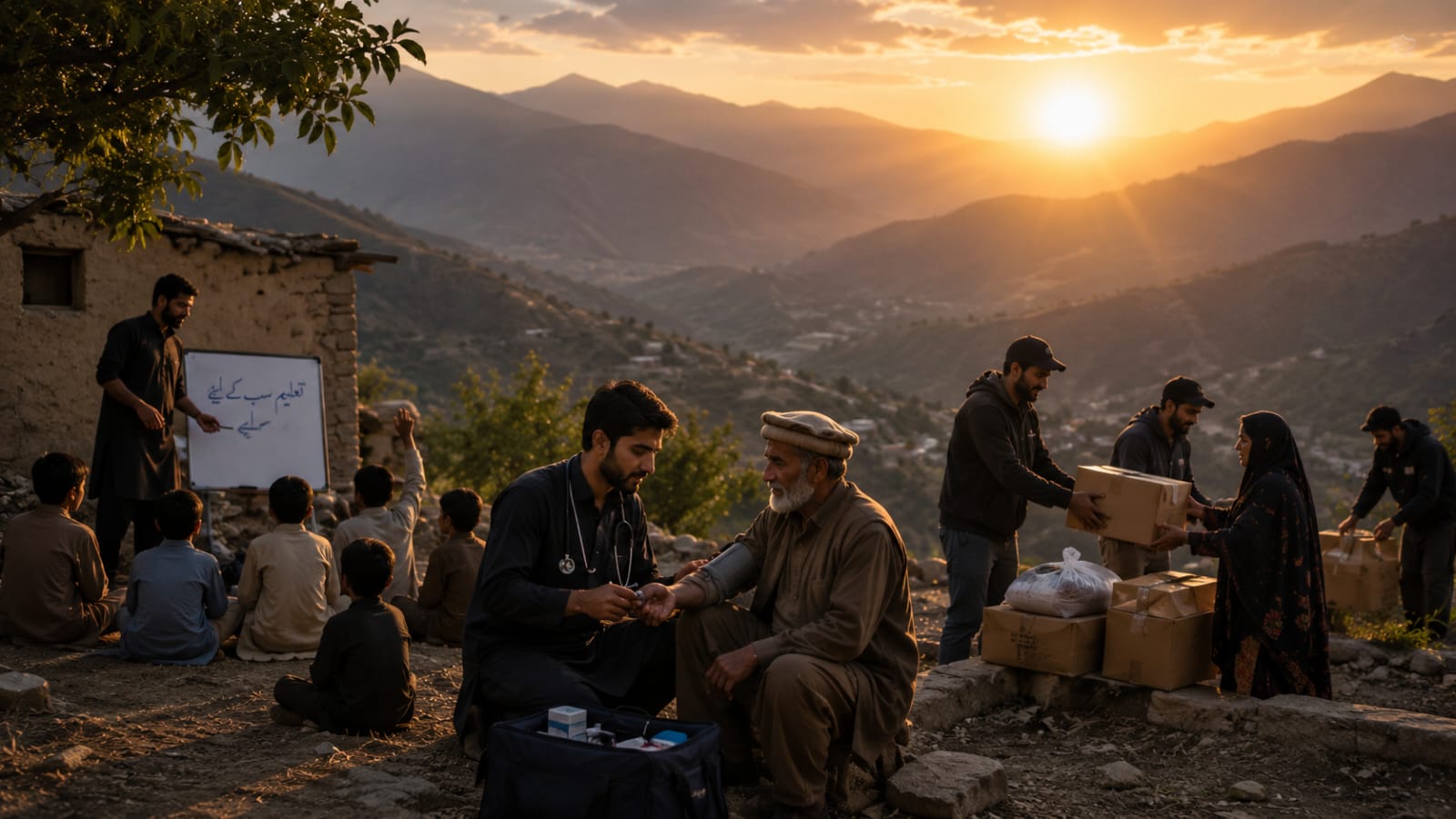
Main Thematic Areas

01

Education and Skill Development

  • Promoting inclusive education, literacy, and vocational training to improve learning outcomes across diverse communities.
  • Supporting underprivileged students through scholarships, educational assistance, and access to learning materials.
  • Establishing community learning centers, technical institutes, and digital classrooms to enhance access to modern education.
02

Health and Well-Being

  • Organizing medical camps, health screenings, and preventive health awareness programs in underserved areas.
  • Promoting maternal, child, and family health initiatives to reduce preventable health risks.
  • Supporting mental health awareness, hygiene promotion, and basic healthcare education campaigns.
03

Livelihood and Economic Empowerment

  • Creating sustainable income-generation opportunities through micro-enterprises and skills development programs.
  • Encouraging women-led businesses, entrepreneurship, and financial inclusion initiatives.
  • Providing skill-based employment support, vocational training, and small business facilitation.
04

Disaster Relief and Rehabilitation

  • Delivering timely emergency aid, relief supplies, and humanitarian assistance during natural and man-made disasters.
  • Implementing sustainable housing, rehabilitation, and reconstruction projects (e.g., Ghar Program).
  • Developing community resilience through disaster preparedness training, risk reduction, and recovery planning.
05

Environment and Climate Action

  • Promoting tree plantation, waste management, and water conservation practices to protect natural resources.
  • Encouraging sustainable community behavior through environmental education and eco-awareness campaigns.
  • Supporting renewable energy solutions and clean environment initiatives to address climate challenges.
06

Water, Sanitation, and Hygiene

  • Developing access to safe drinking water through water supply schemes, filtration plants, and hand pumps.
  • Supporting sanitation infrastructure, hygiene awareness programs, and clean water storage practices.
  • Implementing water conservation, rainwater harvesting, and sustainable water management initiatives.
07

Social Welfare and Inclusion

  • Supporting orphaned children, widows, senior citizens, and other vulnerable groups through targeted welfare programs.
  • Advocating for disability inclusion, social protection, and equal access to opportunities and services.
  • Promoting civic responsibility, volunteerism, youth engagement, and community participation.

Through these thematic areas, NEIKI SUB SAY FOUNDATION ensures that every intervention contributes to sustainable, inclusive, and transformative community development while addressing immediate needs and long-term societal challenges.